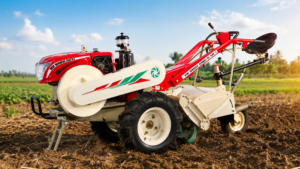
Helping Indian Farmers Make Farming Easier and More Efficient

For an Indian farmer, every farming season brings its own challenges. Managing weeds, finding agricultural labour, completing intercultural operations on time and controlling operational expenses are important parts of everyday farming.
Traditional manual weeding can demand considerable time and physical effort. When labour availability is limited or farming activities overlap, completing these operations at the right time can become difficult.
This is where a power weeder machine for agriculture can make a difference. An agricultural power weeder helps farmers manage weeds and carry out selected intercultural operations between crop rows. It can reduce manual effort, support timely crop maintenance and make suitable farming activities more efficient.
From vegetable cultivation to horticulture and compatible field crops, a power weeder for farming offers practical mechanisation possibilities for different agricultural requirements.
2. What Is a Power Weeder Machine and How Does It Work?
A power weeder is a mechanised agricultural machine primarily used for removing weeds and performing selected intercultural operations in agricultural fields. It generally uses rotating blades or tines to work the soil between crop rows, helping farmers manage unwanted weed growth and reduce repetitive manual work.
Depending on the machine model, power, configuration and compatible attachments, certain agricultural power weeders may also support additional farming applications.
A power weeder is particularly useful in farming situations where crops are planted in rows and sufficient space is available for machine movement. For farmers considering farm mechanisation, selecting the right machine depends on crop type, row spacing, soil conditions, farm size and the required agricultural operations.
3. Why Should Farmers Consider Using a Power Weeder?
Weed management is an important part of crop maintenance. If weeds are not managed appropriately, they can compete with crops for resources such as water, nutrients and sunlight.
Manual weeding remains common across many farming regions, but it can be time-consuming and physically demanding. A suitable power weeder for agriculture can help farmers address some of these challenges through mechanised weed management and selected crop-care operations.
Key benefits of a power weeder machine
- Efficient weed management:
Helps farmers manage weeds between crop rows through mechanised operations, subject to crop spacing and field conditions. - Reduced manual effort:
Reduces the physical effort involved in selected repetitive weeding and intercultural activities. - Better utilisation of time:
Helps complete suitable crop-care operations more efficiently, allowing farmers to plan other agricultural activities. - Timely intercultural operations:
Supports weed management and selected soil-working activities at appropriate crop stages. - Multiple farming applications:
Some models support additional operations through compatible attachments, depending on the machine configuration. - Practical mechanisation for different farm requirements:
Power weeders are available in different configurations to suit varying crop patterns, field conditions and farming needs.
Actual benefits and operating savings depend on crop type, field size, soil conditions, labour rates, machine utilisation and operating practices.
Where Can Farmers Use a Power Weeder?
One of the important considerations when purchasing a power weeder is understanding whether it is suitable for the crops grown on the farm. Power weeders can support selected operations across different farming environments.
Power Weeder for Vegetable Farming
Vegetable crops such as chilli, tomato and onion may require regular weed management and intercultural operations. Where crop spacing and field conditions permit, a suitable power weeder can help farmers carry out selected operations between rows.
Power Weeder for Horticulture and Orchards
Orchards and horticultural farms may require periodic weed management and suitable soil-working activities. The correct machine configuration and access space are important when selecting a power weeder for these applications.
Power Weeder for Field Crops
In compatible row-planted crops, power weeders can support inter-row weed management and selected intercultural operations.
Power Weeder for Small and Mixed Farms
Farmers cultivating multiple crops across different plots can explore suitable machine configurations and attachments based on their operational requirements.
Farmer tip: Before purchasing, check crop spacing, soil conditions, machine
dimensions and the recommended operating method. Using an unsuitable machine or operating it at the wrong crop stage may damage crops.
How VST Is Making Power Weeder Mechanisation More Accessible:
The 5A Framework From Product Awareness to Long-Term Farmer Adoption Imagine a farmer who spends considerable time and effort on manual weeding. The farmer may have heard about power weeders but may not know which model is suitable, where to purchase one, how much it costs or how to operate it. Even if the farmer is interested, these unanswered questions can delay the purchase decision. This is an important challenge in agricultural mechanisation. VST’s 5A Framework addresses the different stages of this farmer journey through five connected pillars:
AWARENESS → AVAILABILITY → ACCESSIBILITY → AFFORDABILITY → ABILITY
Each pillar addresses a practical farmer requirement and helps move the customer from initial interest towards confident machine ownership.
AWARENESS – Helping Farmers Discover the Benefits of Power Weeders
The farmer’s challenge:
Many farmers continue to follow traditional farming practices because they may not have seen a power weeder operating in their own crop or field conditions. They need practical answers to questions such as: What is a power weeder? How does it help in weed management? Which crops can use a power weeder? How much manual effort can mechanisation reduce? Which machine is suitable for my farm?
How VST addresses this through Awareness:
VST focuses on educating farmers about power weeder applications through field-level and digital communication.
Key initiatives include:
- Village-level demonstrations showcasing machines in actual farming conditions.
- Crop-specific product videos explaining applications and operations.
- Farmer testimonials highlighting practical experiences.
- Local influencer and progressive farmer engagement.
- Regional-language communication through WhatsApp, YouTube and socialmedia.
- Rural marketing activities that demonstrate the relevance of farm mechanisation.
How this drives market growth:
Awareness helps farmers identify the limitations of existing practices and understand the possibilities of mechanisation. It creates initial product interest, improves VST brand recall and brings power weeders into the consideration set of farmers who may not have previously explored mechanised solutions.
Farmer outcome: “Now I understand how a power weeder can help with my farming activities.”
VST business outcome: Increased brand awareness, product discovery and qualified farmer interest.
AVAILABILITY – Making the Right Power Weeder Available to Farmers
The farmer’s challenge:
After understanding the benefits of a power weeder, the next question is where to find the right machine. Farmers need access to suitable models, compatible attachments, genuine spare parts and dependable service support. A machine that is not available when required may result in a missed purchase opportunity, especially during important farming seasons.
How VST addresses this through Availability:
VST leverages its dealer and service ecosystem to improve access to suitable mechanisation solutions.
Key initiatives include:
- Strengthening dealer presence across important agricultural markets.
- Ensuring access to suitable power weeder models for different farming needs.
- Improving availability of compatible attachments and genuine spare parts.
- Supporting dealer product knowledge and technical training.
- Strengthening service readiness and after-sales support.
- Helping farmers identify suitable products based on their crop and field
- requirements.
How this drives market growth:
Availability helps convert product interest into purchase opportunities. A strong dealer network improves market reach, strengthens customer confidence and supports business growth by bringing products and services closer to agricultural communities.
Farmer outcome: “I can find the right machine and get the support I need.”
VST business outcome: Stronger dealer engagement, improved purchase opportunities and better market coverage.
A3. ACCESSIBILITY – Bringing Product Information and Demonstrations Closer to Farmers
The farmer’s challenge:
Even when the right machine is available, farmers may face difficulties accessing product information, understanding technical features or travelling to a dealer for a demonstration. A complicated buying process can discourage potential customers. Farmers need simple information, convenient demonstrations and assistance in their preferred language.
How VST addresses this through Accessibility:
VST focuses on making product information and customer assistance easier to access through physical and digital engagement.
Key initiatives include:
- Mobile demonstrations and village-level farmer engagement.
- Farm-level demonstration requests, where available.
- Regional-language product information and videos.
- QR codes linking farmers to product specifications and demonstration videos.
- Digital enquiries and customer support channels.
- Dealer locator and access to nearby sales and service support.
- Lead-management processes that help connect interested farmers with relevant
- dealers.
How this drives market growth:
Accessibility reduces the gap between customer interest and actual product interaction. When farmers can easily access information and request demonstrations, they are more likely to understand the product, engage with dealers and consider a purchase.
Farmer outcome: “I can understand the product, see it working and connect with the right dealer.”
VST business outcome: More meaningful enquiries, increased demonstration opportunities and improved customer engagement.
A4. AFFORDABILITY – Helping Farmers Understand the Cost of Mechanisation
The farmer’s challenge:
For many farmers, the initial purchase investment is an important factor. Even when a power weeder offers useful applications, farmers may hesitate because they are uncertain about the investment, EMI options, loan eligibility or applicable subsidies. Affordability is therefore not only about the purchase price. It is also about understanding the available ownership options.
How VST addresses this through Affordability:
VST focuses on helping farmers explore available financing and ownership information through authorised channels.
Key initiatives include:
- Communicating available EMI and loan facilities through authorised finance
- partners.
- Educating farmers about applicable government subsidy schemes.
- Explaining down-payment requirements and financing options.
- Supporting connections with banks and authorised financial institutions.
- Providing information on eligibility, documentation and applicable terms.
- Helping farmers evaluate the machine based on their farming requirements and expected utilisation.
How this drives market growth:
Better financial awareness can reduce uncertainty around purchasing agricultural machinery. When farmers understand the available ownership options, more potential customers can evaluate mechanisation as a practical investment for their farms.
Farmer outcome: “I understand the investment and the ownership options available to me.”
VST business outcome: Wider product consideration and improved opportunities to convert interested farmers into buyers. Financing approval and subsidy eligibility are subject to lender approval and applicable government scheme conditions.
A5. ABILITY – Ensuring Farmers Can Operate and Get the Best from Their Machines
The farmer’s challenge:
Purchasing a power weeder does not automatically mean that a farmer knows how to operate it correctly. Farmers may need guidance on machine handling, crop-specific applications, safety, maintenance and attachment usage. Without proper knowledge, they may not be able to utilise the machine effectively.
How VST addresses this through Ability:
VST focuses on building farmer confidence through demonstrations, training and continued product support.
Key initiatives include:
- Hands-on operator demonstrations.
- Crop-specific machine operation guidance.
- Training on safe handling and suitable operating practices.
- QR-linked DIY videos covering operation and basic maintenance, where
- available.
- Dealer training on machine features and attachment compatibility.
- After-sales assistance, troubleshooting and service support.
- Farmer testimonials and experience-sharing initiatives.
How this drives market growth:
Better product knowledge improves the ownership experience and encourages farmers to use their machines with greater confidence. Satisfied customers can become advocates for mechanisation by sharing their experiences with other farmers. This creates a positive cycle of adoption, customer satisfaction, referrals and long-term brand trust.
Farmer outcome: “I know how to operate, maintain and get value from my machine.”
VST business outcome: Improved customer satisfaction, stronger referrals, repeatengagement and long-term customer relationships.
How the 5A Framework Drives the Complete Power Weeder Buying Journey
The strength of the 5A Framework lies in how the five pillars work together. Each pillar removes a different barrier that may prevent a farmer from adopting mechanisation.
| Stage | Farmer’s Question | VST’s Role | Expected Market Impact |
| Awareness | Why do I need a power weeder? | Demonstrations, videos, farmer stories and campaigns | Product discovery and consideration |
| Availability | Where can I find the right machine? | Dealer network, models, attachments and spares | Purchase opportunities |
| Accessibility | Can I see and understand the product easily? | Field demos, digital information and customer support | Enquiries and dealer engagement |
| Affordability | Can I manage the investment? | Financing and ownership guidance | Improved purchase consideration |
| Ability | Can I operate and maintain the machine? | Training, DIY videos and after-sales support | Adoption, satisfaction and referrals |
The VST Farmer Adoption Funnel
- DISCOVER – Awareness : The farmer learns about power weeders and their benefits.
- CONSIDER – Product Understanding : The farmer explores crop suitability, machine applications and available models.
- CONNECT – Accessibility and Availability : The farmer interacts with VST, requests a demonstration and connects with an authorised dealer.
- PURCHASE – Affordability: The farmer evaluates the investment and explores applicable ownership or financing options.
- ADOPT – Ability: The farmer learns to operate, maintain and use the machine correctly.
- ADVOCATE – Long-Term Relationship: A satisfied farmer shares experiences, recommends mechanisation and helps other farmers discover the benefits. This is how VST can move beyond a conventional product-selling approach towards a complete farmer adoption model.
- Why the 5A Approach Creates a Stronger Market Position for VST: In agricultural machinery, product features are important, but the overall farmer experience also influences purchase decisions. Farmers consider product suitability, availability, investment, service support and ease of operation before choosing a machine. The 5A approach enables VST to address these requirements together.
It connects:
Marketing with field demonstrations: Awareness becomes practical product understanding.Dealers with customer enquiries: Product interest gets connected to purchase opportunities. Digital platforms with rural markets: Product information becomes easier to access. Financing awareness with purchase decisions: Ownership options become clearer. Product training with after-sales support: Purchase develops into long-term customer engagement. The result is a more connected approach to agricultural mechanisation, where the farmer receives support throughout the buying and ownership journey.
How to Choose the Right Power Weeder for Your Farm
Before purchasing a power weeder, farmers should evaluate their specific requirements rather than selecting a machine based only on price or engine power.
Consider these factors:
- Crop type: Identify the crops for which the machine will be used.
- Row spacing: Check whether the machine can operate safely between crop rows.
- Soil conditions: Understand the soil type and field conditions.
- Farm size: Consider the area to be covered and expected machine utilisation.
- Required applications: Identify whether you need weeding alone or additional supported operations.
- Attachments: Confirm which attachments are approved for the selected model.
- Maintenance: Check service availability and genuine spare-parts access.
- Ownership cost: Evaluate the purchase price, running costs and available financing options.
A demonstration at an authorised VST dealer can help farmers understand the machine and identify a suitable solution.
Frequently Asked Questions About Power Weeder Machines
What is the main use of a power weeder?
A power weeder is primarily used for weed management and selected intercultural operations between crop rows. Its applications depend on the machine model and field conditions.
What are the benefits of using a power weeder in agriculture?
A power weeder can reduce manual effort, support timely weed management, improve the efficiency of selected crop-care activities and help farmers manage their time more effectively.
Which power weeder is suitable for vegetable farming?
The suitable machine depends on crop type, row spacing, soil conditions and the required operation. Farmers should seek a product demonstration and dealer guidance before purchasing.
Can a power weeder be used in multiple crops?
Yes, suitable power weeders can be used across different crop applications, provided the machine configuration, crop spacing and operating conditions are appropriate.
Can a power weeder perform multiple operations?
Some models support additional farming operations through compatible attachments. Farmers should confirm the approved applications for their specific model.
How do I know which power weeder is suitable for my farm?
Consider crop type, field size, row spacing, soil conditions, required operations, attachment compatibility and service access. A field demonstration can help you make an informed decision.
Is financing available for VST power weeders?
Financing options may be available through authorised channels, subject to location, lender eligibility and applicable conditions. Contact an authorised VST dealer for current information.
How can I learn to operate a VST power weeder?
Farmers can approach an authorised VST dealer for product demonstrations and operating guidance. Official product videos and QR-linked DIY resources may also be Available.
Make the Right Move Towards Smarter Farming with VST Every farmer has different requirements. The right agricultural machine should match the crop, field conditions, farming operations and ownership needs. VST believes that successful mechanisation is not just about making machines available. It is about helping farmers understand the benefits, access the right products, explore ownership options and develop the confidence to use them. Through the 5A approach – Awareness, Availability, Accessibility, Affordability and Ability – VST focuses on supporting farmers at every stage of their mechanisation journey.
Explore VST Power Weeder solutions, understand their applications and connect with an authorised VST dealer to find the right machine for your farm. VST – Making Farm Mechanisation More Accessible to Every Farmer.