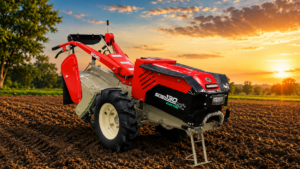
Best Mini Or Compact Tractor in India: Complete Buyer Guide Handbook 2025–2026
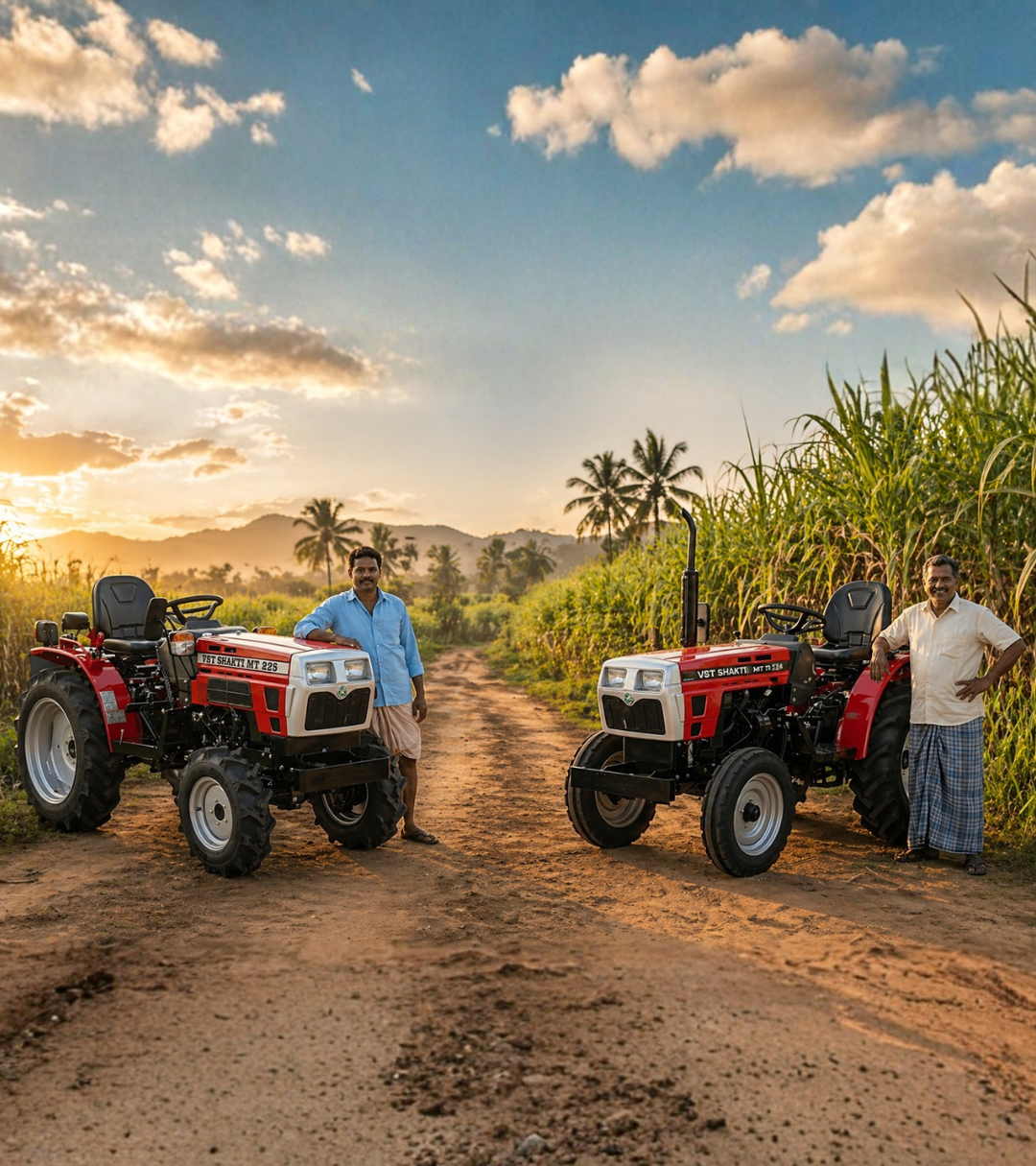
Best Mini Or Compact Tractor in India: Complete Buyer Guide Handbook 2025–2026
Buying a mini Or Compact tractor in India is one of the most important financial decisions a farmer will ever make. Get it right, and the machine pays for itself in savings, productivity, and reduced labour within a few seasons. Get it wrong, and you are stuck with a machine that is underpowered for your soil, too wide for your orchard rows, or too expensive to maintain. This complete buyer’s guide handbook is designed to give every Indian farmer — whether you farm 1 acre or 15 acres — all the information needed to take the best informed decision. And at the center of this situation, one brand consistently stands above the rest: VST Tractor, India’s pioneer 4 Wheel Drive compact tractor company started development and manufacturing of compact tractors in India, more than 5 decades back in 1982 .
1. What Is a Mini Tractor? Definition, HP Range, and Classification
A mini tractor — also known as a compact tractor or chhota tractor — is a small agricultural machine designed to handle farming tasks on land where a full-size tractor is either too oversized, too expensive, or too fuel-hungry. In India, mini tractors are officially classified in the 10 HP to 39 HP range, with most models falling between 17 HP and 39 HP for general farm use.
Mini tractors are not a compromise on a full-size tractor — they are a purpose-built machine category. For over 86% of Indian farmers who own small and marginal landholdings of less than 2 hectares or an exclusive niche segment involved in specific orchard, vineyard, horticulture or row farming, a mini tractor is not just the smart choice; it is often the only practical choice.
Technical Specifications of a Standard Mini Tractor in India
Understanding the technical parameters helps you compare models accurately and choose the right machine for your farm. Here are the key specifications to evaluate:
Engine and Power Engine type is almost universally a single, 2, 3 or 4–cylinder water-cooled diesel engine. HP range spans 11 HP to 39 HP, with the most common working range being 17 HP to 39 HP. Engine displacement typically falls between 850cc and 1650cc. Rated RPM is usually between 2200 and 2800 RPM. Fuel tank capacity ranges from 18 litres to 30 litres, depending on the model. Fuel consumption averages 1.2 to 2.5 litres per hour, depending on load, soil conditions and the application used.
Transmission and Gearbox Most mini tractors offer 6 forward and 2 reverse gears at the entry level, with advanced models offering 8+2 or 9+3 options. Gear type is either Sliding mesh, constant mesh or fully synchromesh. Clutch type is a dry single-plate or dual-plate clutch.
Hydraulics and Lifting Hydraulic system type is a 3-point linkage Category I & Category II system, which is standard across all mini tractors. Lifting capacity ranges from 750 kg to 1500 kg, depending on the model and configuration. Draft control, position control, and mixed control options are available on premium models.
PTO (Power Take-Off) Standard PTO speed is 540 & 540E (Dual speed PTO) some advance options have IPTO and RPTO options available on selected VST models, enabling front and mid-mounted implement use.
Dimensions and Weight Overall length ranges from 2400 mm to 3200 mm. Overall width ranges from 1100 mm to 1600 mm. Wheelbase is typically between 1400 mm and 1800 mm. Ground clearance ranges from 250 mm to 380 mm. Kerb weight ranges from 750 kg to 1300 kg. Minimum turning radius is between 2.1 metres and 2.5 metres — a critical figure for orchard and row-crop work.
Tyres Front tyres are typically 5.0-12 to 7.0-14 size. Rear tyres range from 8.0-18 to 12.4-24 size for better traction and stability.
Key Features of Mini Tractors
Mini tractors offer a distinct set of features that make them uniquely suited to Indian farm conditions:
Compact body design allows access to narrow field rows, orchard lanes, and terraced hillside plots.
Low fuel consumption keeps operating costs manageable even at high daily usage.
Easy operation with simple controls makes mini tractors accessible to farmers with minimal training.
Compatibility with a wide range of implements — Rotovators, Cultivators, Seed drills, Sprayers, Trailers, Plough, Ridger and Post-hole diggers — multiplies the utility of a single machine.
Optimized power to weight ratio , leaving low ground pressure, preventing soil compaction in vegetable gardens and sensitive crop leading to better germination and overall yield.
Good resale value due to strong demand in the used tractor market.
Available in both 2WD and 4WD configurations to suit varied terrain. Ergonomic seating and vibration-dampened controls reduce operator fatigue during long working hours.
2. What Makes Mini Tractors Different from Other Tractors?
This is a question many first-time buyers ask. Here is a clear, side-by-side understanding of how mini tractors differ from standard and heavy-duty tractors:
Size and Weight: Mini tractors are significantly lighter and shorter than standard tractors. A standard 50 HP tractor weighs approximately 2,500–3,000 kg, while a mini tractor in the 20–25 HP range weighs 800 –1,400 kg. This lighter build means less soil compaction and easier maneuverability.
Horsepower Range: Standard tractors operate between 20 HP and 75 HP. Heavy-duty tractors go beyond 75 HP. Mini tractors operate between 17 HP and 39 HP — enough power for all small and medium farm operations without the associated fuel and purchase cost.
Purchase Cost: A standard 45 HP tractor costs Rs. 6 lakh to Rs. 10 lakh. Mini tractors start from Rs. 3.80 lakh and go up to Rs. 7.19 lakh for most models, making them 30–50% cheaper upfront.
Fuel Economy: Mini tractors consume 1.2 to 2.5 litres of diesel per hour compared to 3 to 5 litres per hour for standard tractors. Over a farming season, this difference translates to significant savings up to 50% per hour.
Turning Radius: Mini tractors have a minimum turning radius of 2.1 to 2.5 metres versus 3.2 to 4.5 metres for full-size tractors. This makes mini tractors far more practical in orchards, greenhouses, and small plot farming.
Application Scope: Standard and heavy tractors excel at large-scale ploughing, harvesting operations, and heavy haulage. Mini tractors excel at inter-cultivation, spraying, orchard management, seedbed preparation, and transportation on small and medium farms.
Maintenance Cost: Due to simpler engines and fewer moving parts, mini tractor maintenance costs are 30–50% lower than standard tractors on a per-season basis.
The bottom line is that a mini tractor is not a smaller version of a big tractor — it is an independently designed machine category with FRUGAL Engineering, built for a different purpose and a different farmer with progressive mindset. VST Tractor has been building exclusively in this category since 1982, which is why its engineering for compact farm use is unmatched.
3. Why Mini Tractors Are Booming in India Right Now
India’s mini tractor market is growing at a rapid pace. Domestic tractor sales crossed 10 lakh units in a single year for the first time, with the sub-39 HP segment being among the fastest-growing categories. Several factors are driving this growth in 2025–2026.
First- The Government of India reduced GST on tractors and farm equipment to a flat 5% from September 22, 2025, making mini tractors meaningfully more affordable overnight.
Second- Rising labour costs —with continuous increase of rural youth migration to city areas for job opportunities and loss in farming, Manual working in field is becoming too expensive and time consuming. A mini tractor can reduce farm labour costs by up to 70% across key operations while taking care of short time frame available for different farming operations right from seed bed preparation to post harvest movement.
Third- The expansion of horticulture, vegetable farming, and high-density orchard cultivation has created massive demand for compact, precise, and fuel-efficient machines that can work in row crops and narrow spaces.
Fourth – Improved access to tractor loans, EMI schemes, and government subsidies has brought mini tractor ownership within reach for millions of farmers who previously could not afford it.
4. Uses of Compact/Mini Tractors — What Can a Mini Tractor Do?
Mini tractors are multi-purpose machines. Here are the primary applications where they deliver consistent value:
Farming Operations: Ploughing, tilling, and preparing for seedbed in small fields. Inter-row cultivation for weed control in row crops. Sowing with compatible seed drill attachments. Spraying fertilizers and pesticides with boom sprayer attachments. Rotavator for soil mixing and residue management.
Transportation: Haulage of produce from field to road using a trolley attachment. Movement of farm inputs like fertilizer bags, seeds, crop harvest, and equipment’s. On-farm logistics between fields and storage areas.
Horticulture and Orchard Work: Inter-row cultivation in mango, pomegranate, grape, and coconut orchards. Spraying in high-density orchard and vineyard rows. Mulching and soil preparation in raised bed vegetable farming.
Construction and Land Development: Light earthmoving and levelling with a blade attachment. Post-hole digging for fencing using a hydraulic earth auger. Land grading and road maintenance on farm tracks.
Commercial and Agri-Business Use: Custom hiring services where a farmer rents the tractor by the hour to neighbors — a growing income stream for mini tractor owners. Nursery and greenhouse operations. Landscape maintenance on estates and large properties.
5. Benefits of Using a Mini Tractor
Saves Time and Labour: A mini tractor completes in one hour what would take five to eight farm workers a full day to achieve manually. For critical time-sensitive operations like sowing and harvesting, this speed advantage directly protects yield.
Increases Productivity: Mechanized operations produce more uniform results than manual labour — consistent seeding depth, uniform spray coverage, and precise inter-cultivation spacing all contribute to better crop outcomes.
Multi-Purpose Usage: One mini tractor with the right set of implements can replace a rotavator, a plough, a sprayer, a seed drill, and a transport vehicle — consolidating multiple equipment costs into a single asset.
Cost Efficiency in the Long Term: Though the upfront cost requires financing, a mini tractor’s operating cost per acre is significantly lower than hiring daily labour over multiple seasons. Most farmers recover their investment within 3 to 5 years.
Precision Farming Advantages: Uniform tillage depth, consistent row spacing, and controlled spray application improve input efficiency — reducing fertiliser and pesticide waste while maintaining crop health.
6. Maintenance and Servicing — Keeping Your Compact Tractor in Perfect Condition
Daily Checks (Before Every Use)
- Check engine oil level and top up if required.
- Check transmission oil level and top up if required [Gear box oil] .
- Inspect coolant level in radiator top up if required.
- Check tyre pressure — under-inflated tires increase fuel consumption and soil compaction.
- Inspect the air filter for dust blockage — critical in dry soil conditions.
- Check fuel level and look for any leaks around the fuel line and tank.
- Test all lights and horn if operating in low-visibility conditions.
- Inspect Battery charge by battery charge indicator or magic eye [ it should show green]
- Check Radiator screen for any dust accumulation – clean if required.
Regular Servicing Schedule
- Engine oil change: 1st Service on 100 hours of operation & Subsequent Service Every 250 hours of operation or as specified in the owner’s manual.
- Air filter cleaning: Every 50 hours; replacement every 250 hours in dusty conditions.
- Fuel filter replacement: Every 250 Hours.
- Gear oil and hydraulic oil change: Every 1000 hours.
- Battery terminals: Clean every 60 days to prevent corrosion.
- Grease all grease point at every 50 Hours
- Full-service inspection: Every 1000 hours or once per season, whichever comes first. VST’s 252 service centers across India provide scheduled servicing with genuine spare parts and trained technicians.
Common Issues and Fixes
- Engine hard to start: Check battery charge, fuel quality, and air filter condition.
- Black smoke from exhaust: Usually indicates a clogged air filter or excess fuel injection — service immediately.
- Hydraulics not lifting properly: Check hydraulic oil level and filter condition.
- Excessive vibration: Check Tyre pressure balance and engine mount condition and check idling RPM
- Overheating: Check coolant level, radiator cleanliness, and fan belt tension.
- Tractor not moving: check clutch play and linkage
Spare Parts Availability
VST genuine spare parts are available at all 252 VST service centers. Key consumable parts — air filters, fuel filters, engine oil filters, belts, and brake pads — are also available at most authorized rural dealers. Avoid non-genuine parts as they can void warranty and reduce engine life significantly.
Cost of Maintenance
Annual maintenance cost for a VST Compact tractor in regular farm use is estimated at Rs. 8,000 to Rs. 20,000 per year, depending on usage hours and operating conditions. This is 30–50% lower than the equivalent annual maintenance cost for a standard 45–50 HP tractor
Safety Tips for Compact tractor Operation
Safe Driving Practices
Always perform a pre-operation check before starting. Wear seat belts where fitted. Never allow passengers on the tractor unless a dedicated seat is provided.
Disengage PTO before alighting from the tractor. Keep hands and feet away from moving PTO shafts and implement linkages at all times.
Load Management
Do not exceed the tractor’s rated hydraulic lifting capacity. Distribute trolley loads evenly to prevent rear instability. On slopes, keep heavy loads closer to the tractor’s centre of gravity. Never tow a load that exceeds the manufacturer’s recommended drawbar pull rating.
Night Operation Tips
Use all headlights and rear lights during night operation. Keep reflective markers on attached implements and trailers visible to oncoming traffic. Reduce speed significantly — terrain and obstacle visibility are limited at night. Ensure the path ahead is clear of children, animals, and obstructions before moving.
Preventing Accidents
Never operate on slopes exceeding the manufacturer’s rated maximum incline angle — typically 20 to 25 degrees for Compact tractors. Slow down on turns and near field edges. Never operate under the influence of fatigue. Keep children away from the operating area at all times. Engage the parking brake whenever the tractor is stationary, even briefly.
8. Latest Trends in the Mini Tractor Industry
Electric Tractors
India’s first electric tractors are entering commercial production in 2025–2026, with several startups and established OEMs investing in battery-powered compact farm machines. Electric mini tractors promise zero operating fuel cost and lower maintenance, but current battery range limitations of 4 to 6 hours per charge restrict their use to high-frequency, short-duration operations. VST Tillers Tractors is actively monitoring this space given its focus on FRUGAL and sustainable farming technology and its EV Tractor launched at AGRITECHNICA 2023 ( Germany ). The availability may be ensured based on right demand and infrastructure development in near future.
AI and Smart Farming Integration
Artificial intelligence is beginning to appear in Indian agriculture through soil health sensors, automated irrigation management, and drone-based crop monitoring. In tractors, AI-assisted load management — similar in principle to VST’s FENTM load-sensing system — is the first practical integration, optimizing power and fuel in real time without operator intervention. VST brand is also investing approx 100 Cr in its Global Technology Centre at Hosur to develop world-class technological machines with FRUGAL engineering concepts.
GPS-Based Precision Farming
GPS guidance systems for tractors allow millimeter level -precise row tracking, eliminating overlaps and gaps in spraying, seeding, and fertilization. While currently more common in large farm operations, GPS-enabled compact tractors are beginning to appear in the Indian market, and adoption in horticulture and high-value vegetable farming is expected to grow significantly in the years ahead.